“Can you paint pressure-treated wood?” This is a question we’ve fielded many times over the years at Ladiesburg Lumber Supply, along with “Can you stain pressure-treated wood?” The answer to both of these recurring questions is a firm “yes.” But the most common reason these kinds of projects fail has nothing to do with the paint or stain; it’s skipping the drying process. In other words, success comes down to knowing when your lumber is ready.
What Makes Pressure-Treated Wood Different
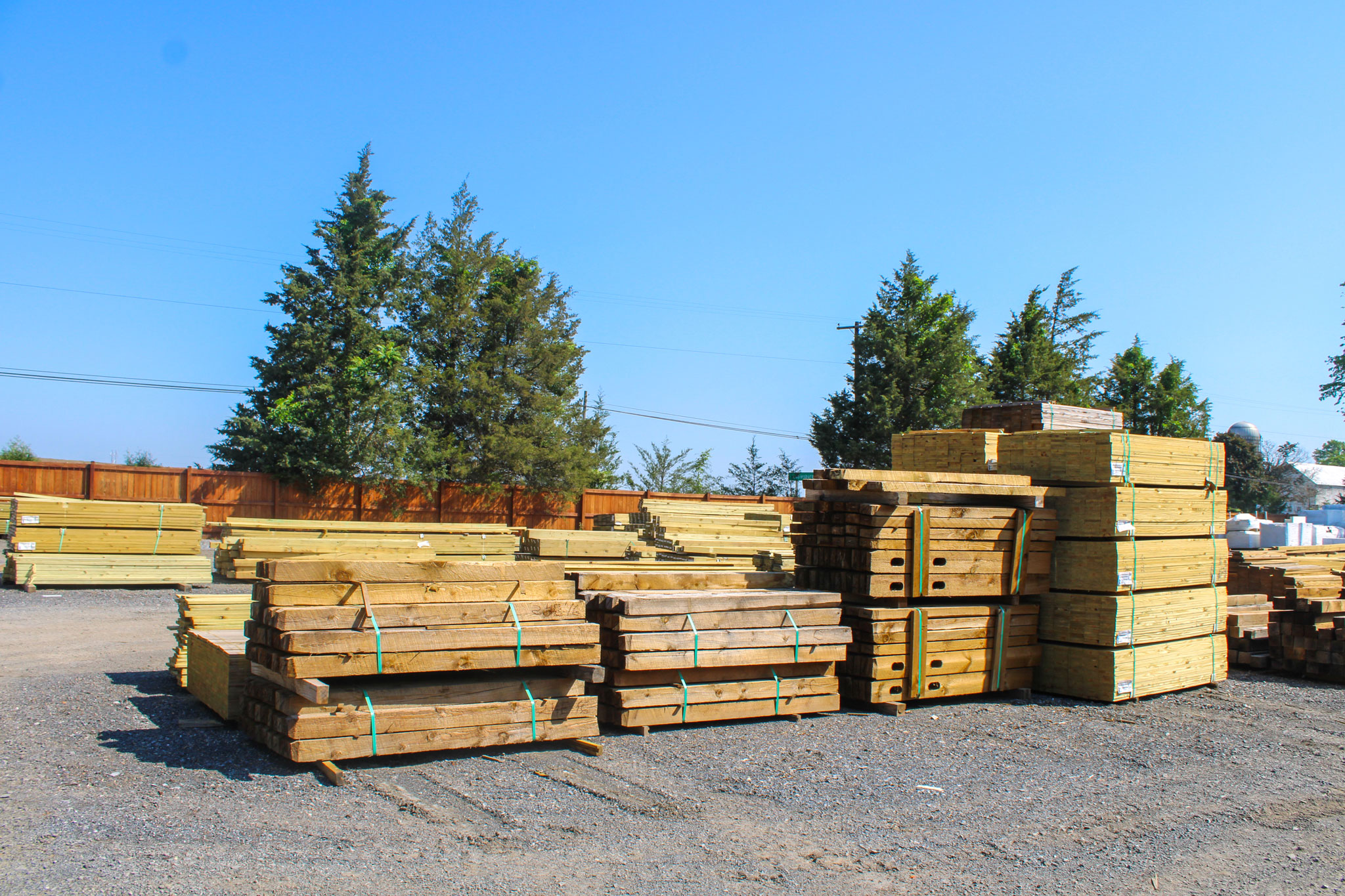
Pressure-treated lumber is made by forcing preservative chemicals deep into the wood under pressure, giving it resistance to rot, insects, and moisture. Freshly treated wood still holds a significant amount of that moisture and chemical residue. Apply finish too early and you seal that moisture in: the result is peeling, bubbling, and adhesion failure within the first season.
How Long Should You Wait?
Can you paint pressure-treated wood right after it comes off the treatment line? No. Following are some factors to consider in timing your project:
- Standard drying window: Three to six months for air-dried lumber; KDAT (Kiln Dried After Treatment) lumber can be ready sooner.
- The water droplet test: Sprinkle a few drops on the surface. If they bead up, the wood isn’t ready. If they absorb quickly, you’re good to go.
- Environmental factors: Humidity, limited sun exposure, and poor air circulation all slow drying. (Central Maryland summers tend to push the timeline toward the longer end of that window.)
- What happens if you paint too early? Peeling, bubbling, and adhesion failure before the end of the first season.
Paint vs. Stain: Which Is Better for Treated Lumber?
Can you stain pressure-treated wood instead of painting it? Absolutely, and for many applications it’s the smarter move.
- Penetration vs. surface: Stain penetrates the wood fibers; paint sits on top. On treated lumber, penetrating finishes tend to hold up better over time.
- Maintenance: Stain needs reapplication more often but is easy to touch up. Paint can last longer but peels and requires more prep work to redo.
- Appearance: Paint gives a solid, opaque color. Stain shows the natural wood grain.
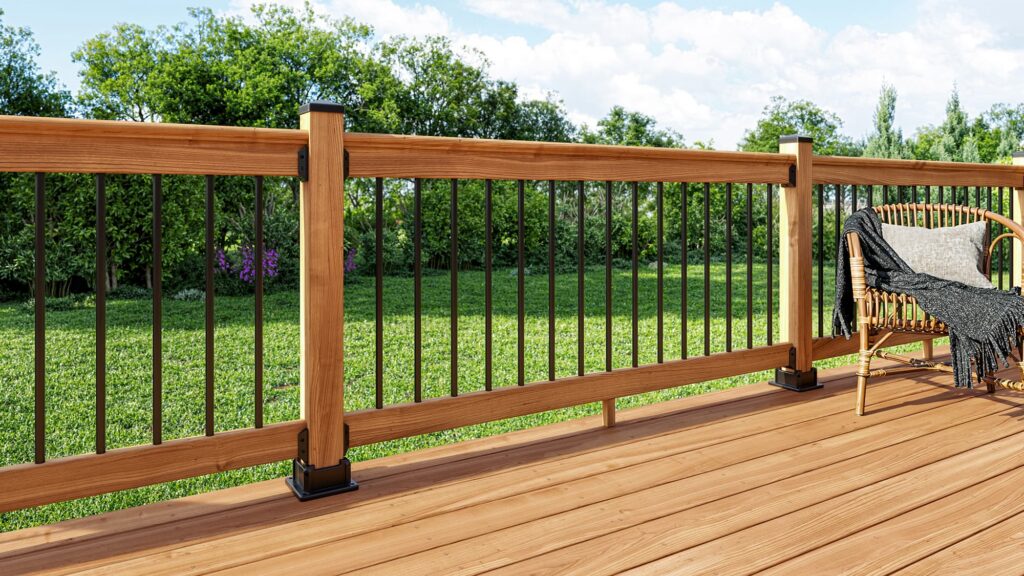
- Best use cases: Paint performs well on trim, railings, and porch applications. Staining pressure-treated wood is the better call for fences, decks, and horizontal surfaces exposed to standing water.
The bottom line? Whether it’s a fence or deck, go with a penetrating exterior stain. If you’re talking railings, trim, or a porch structure, use exterior paint with a proper primer.
How to Paint Pressure-Treated Wood: Step-by-Step
The answer to can you paint pressure-treated wood comes down to prep. Follow these steps:
- Confirm the wood is dry using the water droplet test.
- Clean the surface, i.e., remove dirt, mildew, and debris.
- Sand lightly to open the grain and improve adhesion.
- Apply a high-quality exterior primer: Benjamin Moore Fresh Start® All-Purpose Primer or Ultra Spec® Exterior Primer are both strong choices for treated lumber.
- Apply two coats of exterior paint (with proper dry time between coats).
- Mind the conditions: Avoid direct sun or temperatures below 50°F during application.
How to Stain Pressure-Treated Wood: Step-by-Step
Staining pressure-treated wood follows a similar process, with one key advantage: No primer is required.
- Confirm the wood is dry using the water droplet test.
- Clean and lightly sand the surface.
- Choose your stain: Semi-transparent shows the grain; solid covers more but behaves more like paint over time.
- Apply with a brush or roller, working with the grain.
- Reapplication timeline: every two to three years for horizontal surfaces, every three to five years for vertical ones.
Mistakes to avoid include:
- Applying finish before the wood has fully dried
- Using interior primers or paints on exterior treated lumber
- Skipping primer when painting (not required for staining, but essential for painting)
- Applying product when it’s too hot, too cold, or too humid
- Choosing the wrong product for the job: a fence stain on a porch railing won’t perform the way it should
What Products Work Best?
For painting, Benjamin Moore’s Fresh Start® All-Purpose Primer and Ultra Spec® Exterior line are well-matched to treated lumber: with strong adhesion, the flexibility to handle wood movement, and weather resistance built for a four-season climate like Central Maryland’s. Can you paint pressure-treated wood with a budget-grade paint and primer? You can, but product quality is one of the biggest factors in how long your finish holds. For staining, the Benjamin Moore Arborcoat® line is worth a look for both deck and fence projects.
Shop at Ladiesburg Lumber
Can you paint pressure-treated wood and pick up everything you need in one stop? At Ladiesburg Lumber, the answer is another resounding yes! We carry both pressure-treated lumber and the full Benjamin Moore paint line, so you can take your project from raw boards to finished surface without making a second trip.
And if you want to compare finish options in person before you commit to either paint or stain, just stop in and ask. The team at Ladiesburg Lumbers knows the products you need inside and out, and they’ll help you land on the right choice for your specific project.
Ready to get started? Request a quote or stop by today.