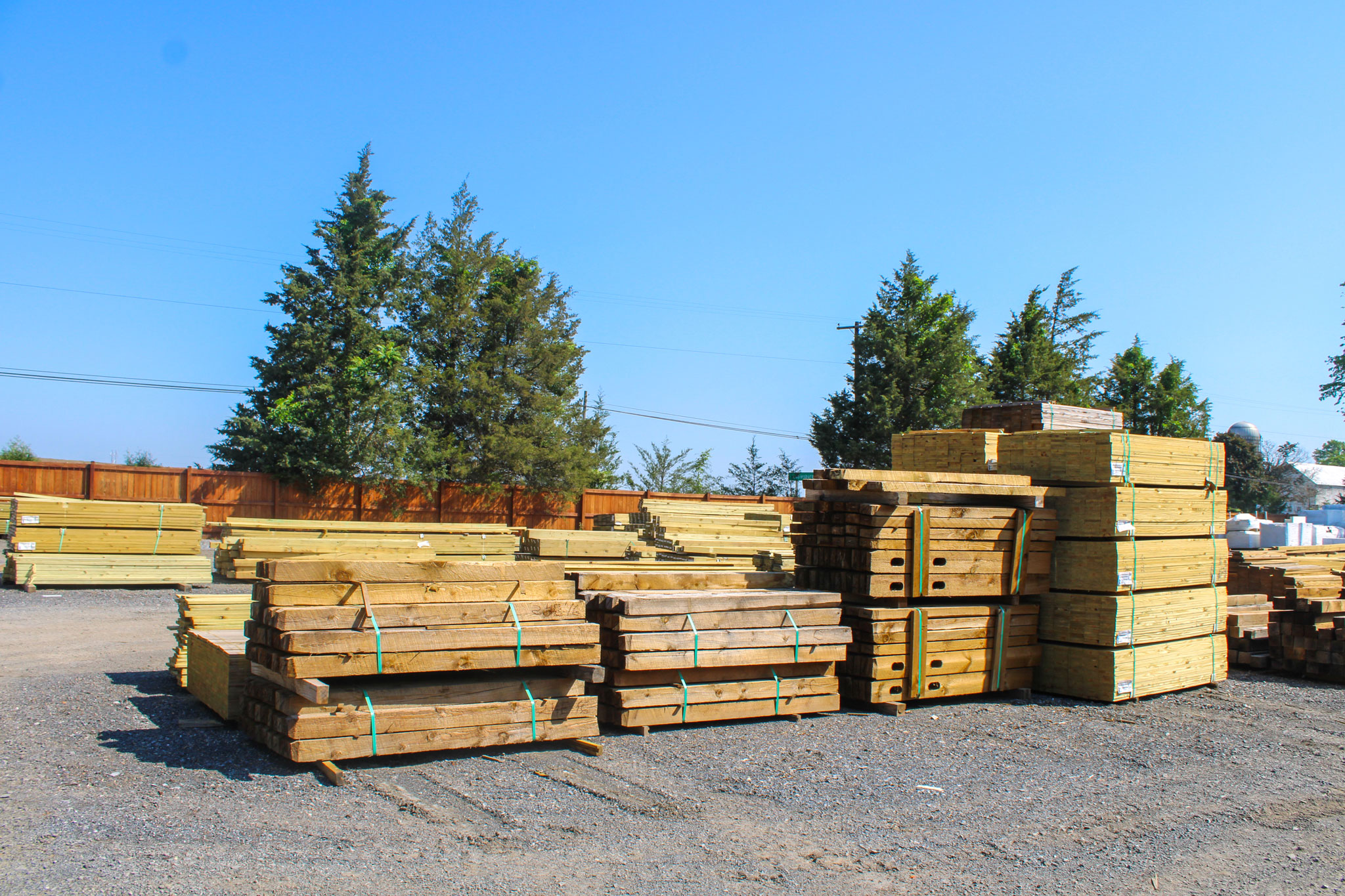
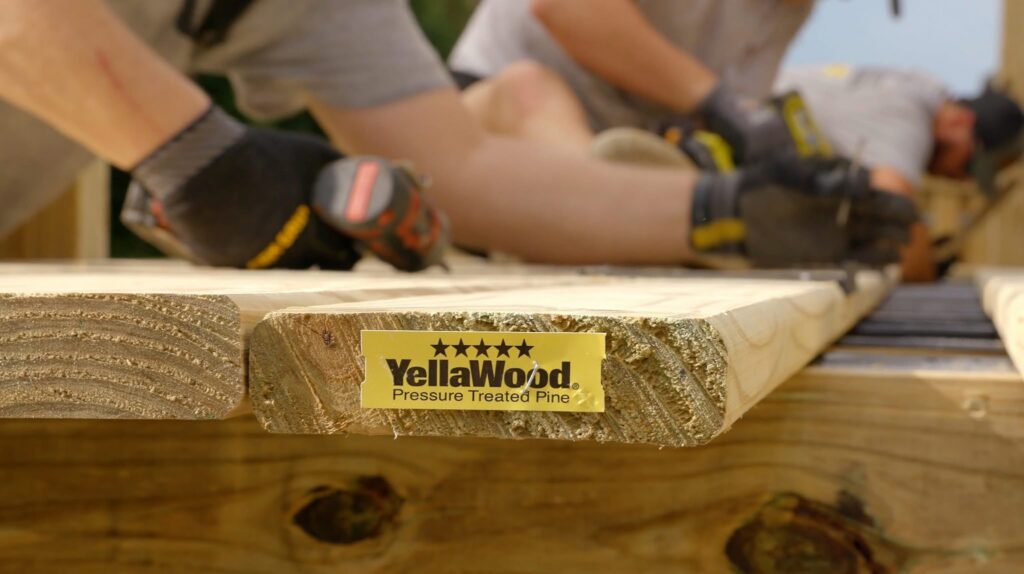
What’s in a name? For William Shakespeare, not a great deal. But for you, standing at the lumber yard contemplating two seemingly identical pieces of pressure-treated wood, there’s a great deal of difference: That being, one is YellaWood and the other isn’t. So why are they different? Following are five important distinctions to consider.
First, What Is Pressure-Treated Wood?
Pressure-treated wood starts its life as regular, raw lumber. It’s then placed inside a cylinder, where a waterborne preservative is forced deep into the wood fibers under pressure; this gives the board its legendary resistance to rot, fungal decay, and termite attack. The result is lumber that can hold up to the rigor of the outdoors and more.
What Is YellaWood?
Before we answer the question “What is YellaWood?” there’s some important context worth knowing: The industry moved away from chromated copper arsenate (CCA) preservatives in the 2000s, due to environmental and health concerns. Modern pressure-treated lumber does use copper-based chemicals, but the specific chemistry matters a lot, and it’s the foundation for understanding what sets the brand apart.
YellaWood is a line of pressure-treated southern yellow pine made by Great Southern Wood Preserving, a company that’s become the standard for pressure-treated wood across much of the Southeast and Mid-Atlantic. The product is treated using the MicroPro MCA process; micronized copper azole is the first wood preservative technology to earn Environmentally Preferable Product (EPP) certification from Scientific Certification Systems. In plain terms, that means the chemistry has been verified as a greener, safer option compared to older preservative formulas, with no compromise in performance.
Five Key Differences
Here’s what sets YellaWood-branded wood apart from other makes of pressure-treated wood:
1. Treatment Chemistry
- Standard pressure-treated lumber typically uses ACQ (alkaline copper quaternary) or CA (copper azole) preservatives.
- YellaWood uses MCA combined with an organic co-biocide, which penetrates more deeply and evenly into the wood fibers.
- The MCA chemistry carries EPP certification, making it a safer choice for applications around people, pets, yards, and gardens.
- Practical implication: The brand is the smarter pick for raised garden beds, playsets, and anywhere close human contact is expected.
2. Moisture Content: KDAT vs. Wet
- Standard pressure-treated lumber comes off the treatment line wet. As such, it will shrink, cup, and warp as it dries after installation.
- YellaWood offers boards that undergo a kiln-dried-after-treatment process (KDAT): returning the wood to its original moisture content before it leaves the facility.
- Practical implication: Boards go into your project straight and stay that way, with less gapping, less warping, and fewer headaches down the road.
3. Appearance
- YellaWood’s MCA process produces a natural golden/tan color, which is closer to untreated wood in tone.
- Practical implication: It’s easier to achieve a clean stain or natural finish without fighting an underlying green cast.
4. Grade & Consistency
- Commodity pressure-treated lumber at big-box stores is graded to a lower standard.
- YellaWood is graded more stringently, which means fewer knots, tighter grain, and more consistent dimensions.
- Practical implication: There’s a better finished appearance, less waste on the jobsite, and a more professional result overall.
5. Warranty
- Many commodity pressure-treated products carry a limited or no meaningful warranty.
- YellaWood carries a Limited Lifetime Warranty against rot, fungal decay, and termite attack.
- Practical implication: You get peace of mind on structural applications like joists, posts, and ledger boards: where failure is not an option.
Where Each Makes Sense
Not every project calls for this higher-performing product, and being straightforward about that is more useful than overselling. Here’s a simple way to think it through:
Standard pressure-treated lumber makes sense for:
- Framing, blocking, and hidden structural work where appearance isn’t a factor
- Projects where budget is the primary constraint
- Applications where the lumber won’t be seen or finished
The branded product makes sense for:
- Anything visible or finished: deck boards, railings, fencing, pergola components, and outdoor furniture
- Garden beds and playsets, where the certified chemistry matters
- Long-term builds, where dimensional stability and warranty coverage justify the investment
A note on ground-contact applications: For posts, footings, and any lumber in direct ground contact, both products need to be rated UC4B or higher. Ground-contact products in this line carry twice the preservative retention of their above-ground counterparts: worth specifying when you’re at the counter.
A Quick Note on Fasteners
Both MCA-treated lumber and standard pressure-treated lumber require hot-dipped galvanized or stainless steel fasteners for exterior use. Standard zinc-plated screws will corrode when they come in contact with the wood’s copper-based preservatives.
The Ladiesburg Lumber team stocks the right hardware to go with your lumber and will make sure you leave with everything your project needs.
What’s in a Name? A Lot
YellaWood’s MCA chemistry, KDAT process, tighter grading, and lifetime warranty make it a meaningfully better product for anything visible, finished, or built for the long haul. Standard pressure-treated lumber has its place, of course: What is pressure-treated wood if not a versatile tool for the right applications? The key is matching the product to the project. Not sure which product is right for you? The team at Ladiesburg Lumber knows wood. Get in touch today and let us help you choose the right lumber for your project.