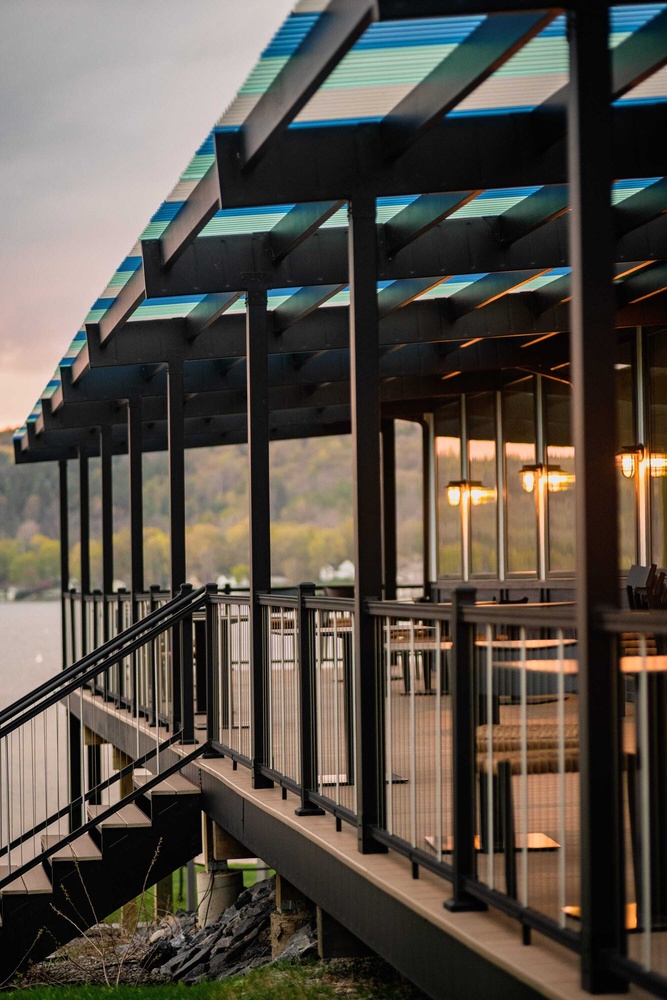
Prowood pressure-treated lumber used for a deck

Can You Paint Pressure-Treated Wood? (And Should You?)

“Can you paint pressure-treated wood?” This is a question we’ve fielded many times over the years at Ladiesburg Lumber Supply, along with “Can you stain pressure-treated wood?” The answer to both of these recurring questions is a firm “yes.” But the most common reason these kinds of projects fail has nothing to do with the paint or stain; it's skipping the drying process. In other words, success comes down to knowing when your lumber is ready.  What Makes Pressure-Treated Wood Different Pressure-treated lumber is made by forcing preservative chemicals deep into the wood under pressure, giving it resistance to rot, insects, and moisture. Freshly treated wood still holds a significant amount of that moisture and chemical residue. Apply finish too early and you seal that moisture in: the result is peeling, bubbling, and adhesion failure within the first season. How Long Should You Wait? Can you paint pressure-treated wood right after it comes off the treatment line? No. Following are some factors to consider in timing your project: Standard drying window: Three to six months for air-dried lumber; KDAT (Kiln Dried After Treatment) lumber can be ready sooner. The water droplet test: Sprinkle a few drops on the surface. If they bead up, the wood isn't ready. If they absorb quickly, you're good to go. Environmental factors: Humidity, limited sun exposure, and poor air circulation all slow drying. (Central Maryland summers tend to push the timeline toward the longer end of that window.) What happens if you paint too early? Peeling, bubbling, and adhesion failure before the end of the first season. Paint vs. Stain: Which Is Better for Treated Lumber? Can you stain pressure-treated wood instead of painting it? Absolutely, and for many applications it's the smarter move. Penetration vs. surface: Stain penetrates the wood fibers; paint sits on top. On treated lumber, penetrating finishes tend to hold up better over time. Maintenance: Stain needs reapplication more often but is easy to touch up. Paint can last longer but peels and requires more prep work to redo. Appearance: Paint gives a solid, opaque color. Stain shows the natural wood grain. Best use cases: Paint performs well on trim, railings, and porch applications. Staining pressure-treated wood is the better call for fences, decks, and horizontal surfaces exposed to standing water. The bottom line? Whether it’s a fence or deck, go with a penetrating exterior stain. If you’re talking railings, trim, or a porch structure, use exterior paint with a proper primer. How to Paint Pressure-Treated Wood: Step-by-Step The answer to can you paint pressure-treated wood comes down to prep. Follow these steps: Confirm the wood is dry using the water droplet test. Clean the surface, i.e., remove dirt, mildew, and debris. Sand lightly to open the grain and improve adhesion. Apply a high-quality exterior primer: Benjamin Moore Fresh Start® All-Purpose Primer or Ultra Spec® Exterior Primer are both strong choices for treated lumber. Apply two coats of exterior paint (with proper dry time between coats). Mind the conditions: Avoid direct sun or temperatures below 50°F during application. How to Stain Pressure-Treated Wood: Step-by-Step Staining pressure-treated wood follows a similar process, with one key advantage: No primer is required. Confirm the wood is dry using the water droplet test. Clean and lightly sand the surface. Choose your stain: Semi-transparent shows the grain; solid covers more but behaves more like paint over time. Apply with a brush or roller, working with the grain. Reapplication timeline: every two to three years for horizontal surfaces, every three to five years for vertical ones. Mistakes to avoid include: Applying finish before the wood has fully dried Using interior primers or paints on exterior treated lumber Skipping primer when painting (not required for staining, but essential for painting) Applying product when it's too hot, too cold, or too humid Choosing the wrong product for the job: a fence stain on a porch railing won't perform the way it should What Products Work Best? For painting, Benjamin Moore's Fresh Start® All-Purpose Primer and Ultra Spec® Exterior line are well-matched to treated lumber: with strong adhesion, the flexibility to handle wood movement, and weather resistance built for a four-season climate like Central Maryland's. Can you paint pressure-treated wood with a budget-grade paint and primer? You can, but product quality is one of the biggest factors in how long your finish holds. For staining, the Benjamin Moore Arborcoat® line is worth a look for both deck and fence projects. Shop at Ladiesburg Lumber Can you paint pressure-treated wood and pick up everything you need in one stop? At Ladiesburg Lumber, the answer is another resounding yes! We carry both pressure-treated lumber and the full Benjamin Moore paint line, so you can take your project from raw boards to finished surface without making a second trip.  And if you want to compare finish options in person before you commit to either paint or stain, just stop in and ask. The team at Ladiesburg Lumbers knows the products you need inside and out, and they'll help you land on the right choice for your specific project. Ready to get started? Request a quote or stop by today.

Read More
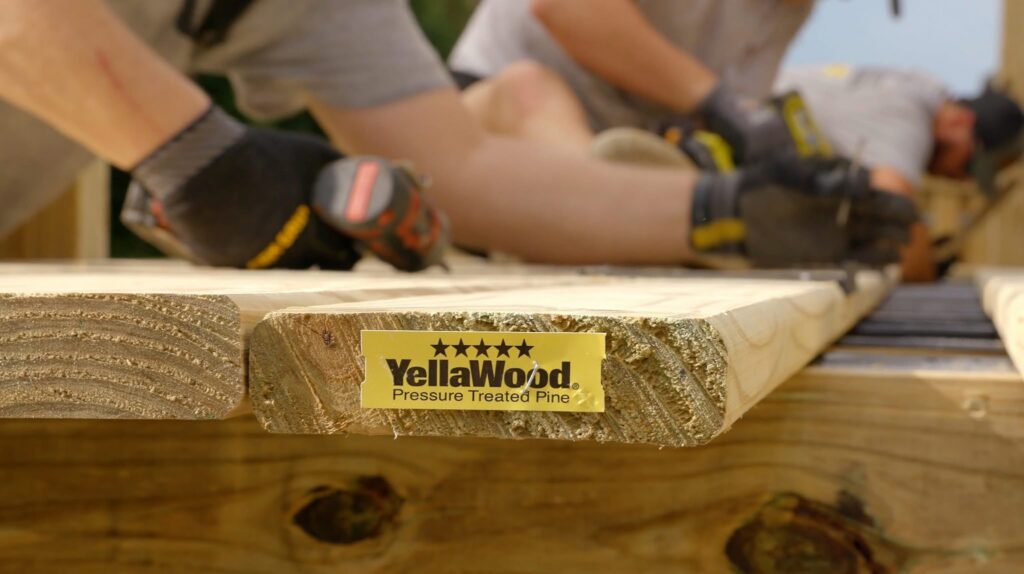
A close-up of Yellawood lumber.

The Difference Between YellaWood & Standard Pressure-Treated Lumber

What’s in a name? For William Shakespeare, not a great deal. But for you, standing at the lumber yard contemplating two seemingly identical pieces of pressure-treated wood, there’s a great deal of difference: That being, one is YellaWood and the other isn’t. So why are they different? Following are five important distinctions to consider. First, What Is Pressure-Treated Wood? Pressure-treated wood starts its life as regular, raw lumber. It’s then placed inside a cylinder, where a waterborne preservative is forced deep into the wood fibers under pressure; this gives the board its legendary resistance to rot, fungal decay, and termite attack. The result is lumber that can hold up to the rigor of the outdoors and more. What Is YellaWood? Before we answer the question “What is YellaWood?” there’s some important context worth knowing: The industry moved away from chromated copper arsenate (CCA) preservatives in the 2000s, due to environmental and health concerns. Modern pressure-treated lumber does use copper-based chemicals, but the specific chemistry matters a lot, and it’s the foundation for understanding what sets the brand apart. YellaWood is a line of pressure-treated southern yellow pine made by Great Southern Wood Preserving, a company that’s become the standard for pressure-treated wood across much of the Southeast and Mid-Atlantic. The product is treated using the MicroPro MCA process; micronized copper azole is the first wood preservative technology to earn Environmentally Preferable Product (EPP) certification from Scientific Certification Systems. In plain terms, that means the chemistry has been verified as a greener, safer option compared to older preservative formulas, with no compromise in performance. Five Key Differences Here's what sets YellaWood-branded wood apart from other makes of pressure-treated wood: 1. Treatment Chemistry Standard pressure-treated lumber typically uses ACQ (alkaline copper quaternary) or CA (copper azole) preservatives. YellaWood uses MCA combined with an organic co-biocide, which penetrates more deeply and evenly into the wood fibers. The MCA chemistry carries EPP certification, making it a safer choice for applications around people, pets, yards, and gardens. Practical implication: The brand is the smarter pick for raised garden beds, playsets, and anywhere close human contact is expected. 2. Moisture Content: KDAT vs. Wet Standard pressure-treated lumber comes off the treatment line wet. As such, it will shrink, cup, and warp as it dries after installation. YellaWood offers boards that undergo a kiln-dried-after-treatment process (KDAT): returning the wood to its original moisture content before it leaves the facility. Practical implication: Boards go into your project straight and stay that way, with less gapping, less warping, and fewer headaches down the road. 3. Appearance YellaWood’s MCA process produces a natural golden/tan color, which is closer to untreated wood in tone. Practical implication: It’s easier to achieve a clean stain or natural finish without fighting an underlying green cast. 4. Grade & Consistency Commodity pressure-treated lumber at big-box stores is graded to a lower standard. YellaWood is graded more stringently, which means fewer knots, tighter grain, and more consistent dimensions. Practical implication: There’s a better finished appearance, less waste on the jobsite, and a more professional result overall. 5. Warranty Many commodity pressure-treated products carry a limited or no meaningful warranty. YellaWood carries a Limited Lifetime Warranty against rot, fungal decay, and termite attack. Practical implication: You get peace of mind on structural applications like joists, posts, and ledger boards: where failure is not an option. Where Each Makes Sense Not every project calls for this higher-performing product, and being straightforward about that is more useful than overselling. Here's a simple way to think it through: Standard pressure-treated lumber makes sense for: Framing, blocking, and hidden structural work where appearance isn't a factor Projects where budget is the primary constraint Applications where the lumber won't be seen or finished The branded product makes sense for: Anything visible or finished: deck boards, railings, fencing, pergola components, and outdoor furniture Garden beds and playsets, where the certified chemistry matters Long-term builds, where dimensional stability and warranty coverage justify the investment A note on ground-contact applications: For posts, footings, and any lumber in direct ground contact, both products need to be rated UC4B or higher. Ground-contact products in this line carry twice the preservative retention of their above-ground counterparts: worth specifying when you're at the counter. A Quick Note on Fasteners Both MCA-treated lumber and standard pressure-treated lumber require hot-dipped galvanized or stainless steel fasteners for exterior use. Standard zinc-plated screws will corrode when they come in contact with the wood’s copper-based preservatives. The Ladiesburg Lumber team stocks the right hardware to go with your lumber and will make sure you leave with everything your project needs. What’s in a Name? A Lot YellaWood's MCA chemistry, KDAT process, tighter grading, and lifetime warranty make it a meaningfully better product for anything visible, finished, or built for the long haul. Standard pressure-treated lumber has its place, of course: What is pressure-treated wood if not a versatile tool for the right applications? The key is matching the product to the project. Not sure which product is right for you? The team at Ladiesburg Lumber knows wood. Get in touch today and let us help you choose the right lumber for your project.

Read More
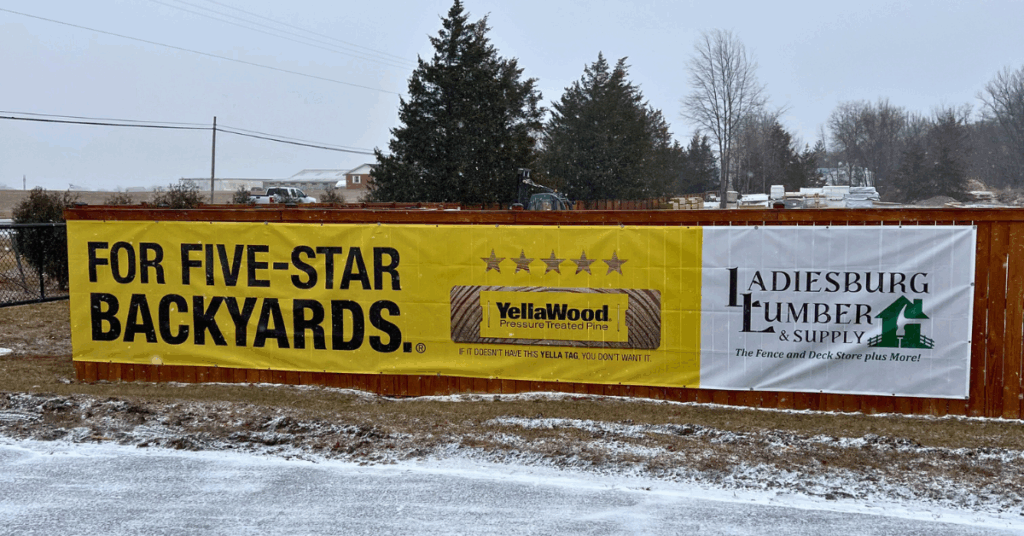
An outdoor banner display featuring a large graphic for YellaWood (supplied at Ladiesburg Lumber).

Why YellaWood Is Our Go-To Choice for Outdoor Projects

When people first envision an outdoor project for their home—a fence, deck, pergola, etc.—the kind of wood they’re going to use in the construction of it probably isn’t the first thing that comes to mind. This is understandable. The initial excitement surrounding a home project will rightly center around the design, various uses, and all the fun and enjoyment you’re going to get out of the end product. But when the rubber meets the road, and it’s time to head to your local lumber supply to select the wood you’re going to use to build your project, the first thing we want to come into your mind is YellaWood. Why? When it comes to outdoor construction, choosing the right building material can make all the difference in both the look and longevity of your project. Over the years, we’ve worked with a wide variety of treated lumber and outdoor-grade products, always seeking the best balance of performance, durability, and aesthetic appeal. After countless builds and customer reviews, one brand consistently rises to the top of our list: YellaWood. At Ladiesburg Lumber, we trust it for everything from backyard decks to custom pergolas—not just because it's a name people recognize, but because we’ve seen firsthand how it performs. Here’s why it’s our top pick for outdoor projects. What Sets It Apart YellaWood lumber is pressure treated lumber. What is pressure treated lumber, you ask? It’s wood that’s been infused with chemical preservatives to protect it from rot, decay, and insect damage—especially termites. This process involves placing the wood in a large cylindrical chamber and using a vacuum and pressure to force the preservatives deep into the wood fibers. This process makes the lumber much more durable for outdoor use or in areas where it may be exposed to moisture, soil contact, or harsh weather. But YellaWood isn’t just any old pressure treated lumber; it’s treated with advanced pressure-treatment technology, making it one of the most reliable products available for outdoor use. Its resistance to rot, decay, and termites is unmatched by other pressure treated lumbers, giving homeowners peace of mind when tackling exterior structures. One of the things we appreciate most about this product is its versatility. That is, it’s available in a wide range of dimensions and grades, making it easy to find exactly what your project needs, whether you're building a raised garden bed or a large-scale deck. Ideal for a Wide Range of Outdoor Projects We’ve supplied this phenomenal pressure treated wood product for just about every kind of outdoor build: decks, fences, pergolas, garden beds, and even custom outdoor furniture. Its performance holds up in varied climates and ground-contact scenarios, which is a huge plus for our customers throughout Maryland and its surrounding areas. Aesthetic Appeal and Finish Options Beyond its performance, our favorite wood here at Ladiesburg Lumber delivers in the looks department, too. With its smooth surface and uniform golden color, it’s easy to see why so many homeowners choose it for visible outdoor spaces. It also takes stain or sealant exceptionally well, allowing for custom finishes that match your home’s style.  Peace of Mind with Proven Reliability At Ladiesburg Lumber, we don’t just want your projects to look great the day they're built. We want them to last for years. One of the most compelling reasons we recommend YellaWood is the warranty and proven track record. With proper care and maintenance, it will deliver long-term reliability: a must for any outdoor investment. The Homeowner’s Choice Whatever outdoor project you envision, bring it to life with YellaWood. It’s the pressure treated lumber that brings together the best of all worlds: exceptional durability, visual appeal, versatility, and the backing of a trusted warranty. There’s no wonder it’s our go-to choice for outdoor projects of every kind. Ready to start your next outdoor build? Our knowledgeable team is here to help you build something beautiful and long-lasting. To explore our full selection of products, stop by Ladiesburg Lumber or contact us today. 

Read More
Large stacks of cut lumber posts for a split rail fence system.

Why Buy Lumber From a Local Lumber Supply Store?

Having trouble deciding where to buy wood? Do you head to the big-box store that has varying degrees of reliability in both quality and inventory, or do you pay a visit to your local lumber store that offers a variety of benefits? There’s no “wrong” answer to this question, just so we’re clear. However, when weighing the benefits a local lumber supply company holds over the bigger names—better quality, personalized service, competitive pricing, and quick delivery, to name a few—the choice seems pretty obvious to us. If you’ll give us your attention for a few minutes, we can open your eyes to all the ways local is better when it comes to your lumber supply options. Superior Quality and Selection Because of the high number of customers coming and going at big-box stores, quantity is frequently prioritized by them. Generally, this also translates to reduced quality. On the other hand, a local lumber store will likely provide better-graded materials that have fewer defects. The variety of wood species found at smaller stores is also much larger, as are specialty cuts and custom milling services. Whether you’re in search of hardwoods, pressure-treated wood, or custom-cut boards, a local lumber yard is more likely to have what you’re looking for. These are all rules rather than exceptions: High quality wood with minimal defects Large variety of wood species Vast array of custom milling options High durability and better longevity Expert Knowledge and Personalized Service While you’re researching where to buy wood, consider not just the products, but the people who will be able to help you during the buying process. At a locally owned establishment, you’re likely to interact with staff who have much more knowledge of what they’re selling when compared to their big-box counterparts. They can provide valuable insights and give informed tips on the lumber that fits your projects, as well as handling techniques and even installation tips—though many projects involving lumber are best left to the professionals. This level of personalized service is difficult to find at bigger stores, where staff turnover is typically higher. Whether this is your first project or your hundredth, there’s valuable knowledge to be imparted by staff at a local lumber supply store. This expert advice has the potential to save you loads of time and money! Supporting the Local Economy Want to support your local community? The health of its economy is vital to it! You’ve probably heard the phrases “shop small” or “shop local.” That’s because they’re businesses that are relying on the support of other community members for business. But that’s only a small part of why you should shop small. When a small business thrives, it’s able to grow. When it grows, it can provide more jobs to fulfill its business needs. In addition, many small businesses source materials from regional suppliers—in the case of Ladiesburg Lumber, we source from a local mill. All of these actions support and strengthen the local supply chain. When that supply chain is strong, the community’s economic health is, as well. Growth can then take off! Competitive Pricing and Cost Savings Most people hold the assumption that small businesses are more expensive than the big-name establishments. While you can find enticing prices at chain stores, a local lumber store is likely to offer competitive pricing through: Bulk purchasing options Discounts for repeat customers and contractors Quality materials that limit waste and reduce long-term costs When you purchase top-tier lumber from a local business, you’re reducing the frequency of issues down the road, in turn saving a substantial amount of money. Convenient Availability and Quick Delivery Large retailers have to meet high demand, so they’re often limited to national distribution networks in order to fulfill orders. Conversely, a small business has more wiggle room, because the local suppliers they use have fewer supply chain disruptions. This means orders can be filled more quickly and reliably. Whether it’s an urgent project that needs to be done yesterday or you need a very specific type of wood, a local lumber supply yard can stock it in an impressively small amount of time (if they don’t already have it). In addition, many of these lumber yards (our’s included) offer flexible options for pickup and delivery, making it easier to do things on your terms. A Lumber Supply Company You Can Trust Buying lumber can be a bit stressful if you don’t know what considerations to make. We have the utmost respect for big-box stores, but their offerings simply can’t compete with what a small lumber supply business offers—superior selection, personalized experiences, competitive pricing, and delivery flexibility. If you want the best quality materials for your lumber project, you won’t regret trusting Ladiesburg Lumber with your needs. Get in touch today so you can build something great tomorrow!

Read More